
Jennie Mezick, Associate Dean for Research, Collections, and Assessment
Jennie Mezick serves as Associate Dean for Research, Collections, and Assessment. She oversees the Libraries’ departments of Acquisitions and Continuing Resources; Assessment Programs and Collection Strategy; Collection Management and Sharing; Cataloging; Special Collections; and Research Impact and Open Access; as well as operations within the Library Storage Annex.
She has a Master of Science in Information Sciences from the University of Tennessee, Knoxville. Most recently, she served as Head of Assessment Programs and Collections Strategy as well as Interim Assistant Dean at UT Libraries. She has experience in collection management, navigating wide-ranging stakeholder relationships, and putting strategic planning into action.
Tell us a little about your background. How did where and how you grew up shape you as a person?
I had an amazing mom who was an early childhood educator. She owned and operated her own preschool, and I got to live every child’s dream by going to work with her every day. When I started elementary school, I attended her preschool for afterschool care. My school didn’t have an art teacher, so she volunteered to fill that void several hours a week. We were very close, yet in group settings she made a real effort to treat me like all the other students. I have a vivid memory of getting frustrated during a class because she insisted I tell her my name and spell it out as she wrote it on my work. At the time I only thought: Woman, you named me. You should know how to spell my name.

She passed away when I was 9 after a very intense battle with HIV and AIDS. For many years my world was turned upside down. I watched my most important person suffer from a terrible disease and its treatments, but I also learned about strength and how to create positivity for yourself in the darkest times. This was in the 1980s, when there was still fear around AIDS, when being a woman with AIDS was unusual, and when supports in Knoxville were small but fiercely strong communities.
All of this had a significant impact on my early understanding of humanity and society. After my mom passed, my father and I were left with just each other and a different life to figure out. We went to restaurants every night—out of necessity. I tagged along to his computer club meetings, which were vastly different from an AIDS support group. He traveled a lot, and I spent long stretches of time with my grandparents, whose influence absolutely shaped my life.
I also got to experience some amazing places. I was 11 when I took my first international flight as an unaccompanied minor. These trips didn’t involve the typical tourist destinations; they expanded my understanding of culture through full immersion. I spent days hanging out at mom-and-pop stores, having dinner in community gardens, and picking up just enough words to play with other kids.
While my mom was an involved parent in a more traditional sense, my dad was the opposite. He taught me about independence and gave me the tools and opportunities to practice being an adult while also being there when I needed him. He also instilled a sense of whimsy and fun that I believe is core to all success.
What attracted you to librarianship?
Several things that took place while I was earning my master’s degree:
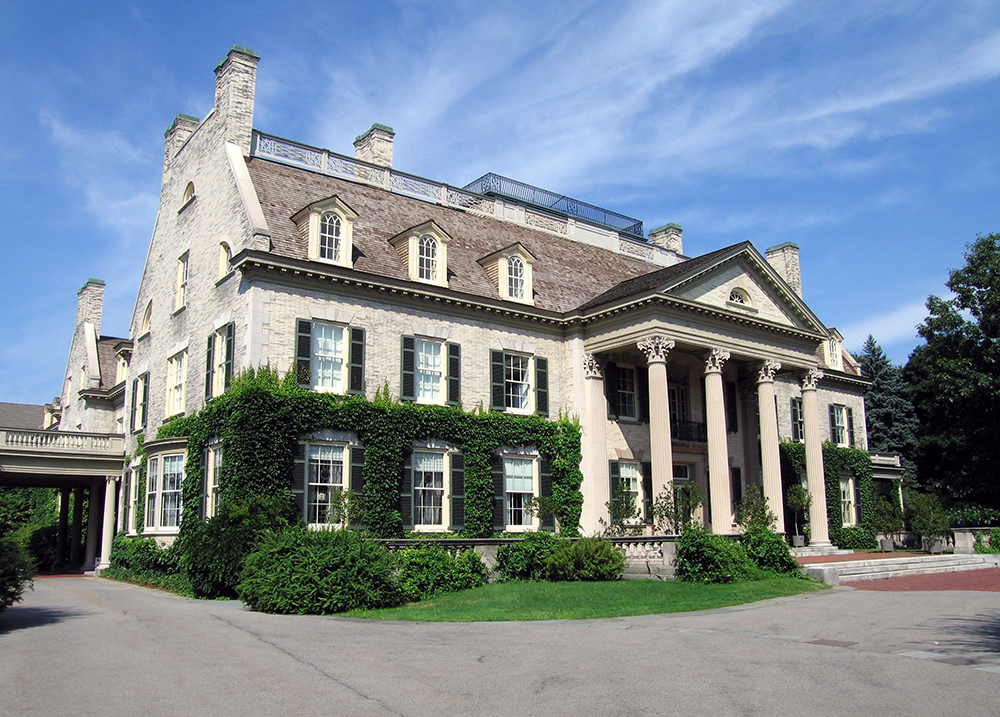
- The reading room at the George Eastman House library in Rochester, New York, where I studied—it’s a serene space where researchers gain access to one-of-a-kind materials under natural light streaming through floor-to-ceiling windows that overlook the gardens.
- A librarian who taught the coding section of a course during my master’s program—she completely transformed how I understood what librarians do and where the profession was heading.
- Interlibrary loan—a university in New Mexico mailed a book I needed for my master’s thesis all the way to the George Eastman House library in upstate New York. It was the only copy I could locate in OCLC, 1 and I was absolutely floored that libraries provided this service, and that it cost me nothing.
1 OCLC, formerly the Online Computer Library Center, maintains the largest online public access catalog in the world.
What’s the biggest challenge in librarianship today and how do you want to help address it?
Technologies and society are changing so rapidly that libraries can easily fall out of alignment with what users actually need. I plan to address this at UT by bridging gaps between our services and through campus partnerships, and by realigning our strategic direction to prepare us for changes ahead.
What’s the best book you’ve ever read or listened to?
There’s no single “best” for me. I’ve read too many books that hit at exactly the right moment. But if forced to choose, I’ll give the most millennial answer possible: Harry Potter.

What hobbies do you have unrelated to libraries or reading?
I love playing tennis. One of my kids and I joined a fencing club, and we’ve been learning the art of foil for the last year (that’s stabbing each other with lots of rules that determine who gets the point). And pretty much any activity that gets me moving in nature with friends and family—walking, hiking, biking. If that outdoor activity involves seeing new places, then it’s pretty much my ideal good time.
What’s the best thing in your refrigerator right now?
I have two sons, so the best thing in my fridge right now is probably a condiment.
What brings you joy?
Being part of a fantastic group of people who are energized by a shared goal, problem-solve with creativity, support each other, celebrate successes together, and grow as individuals and as a team. And sushi, puppies, kittens, sunshine, and a good cup of tea.
What sports team do you root for and why is it the Vols?
The Vols, naturally! Our fans are unmatched. They are the loudest and most passionate in the world!



Jen Bartlett, Associate Dean for Engagement, Learning, and Public Services
Jen Bartlett serves as Associate Dean for Engagement, Learning, and Public Services. She oversees the Libraries’ departments of Arts and Humanities; Data and Digital Scholarship; Health, Wellness, and Professional Programs; Immersive Spaces and Technologies; Teaching and Learning Programs; and Public Services at the John C. Hodges Library, the George F. DeVine Music Library, and the Webster C. Pendergrass Agriculture and Veterinary Medicine Library.
She holds a Master of Library Science from Indiana University and possesses extensive experience in library leadership and administration. Most recently, she served at the University of Kentucky Libraries. Her expertise includes strategic planning, cultivating partnerships, and leadership at an R-1 land-grant university.
Tell us a little about your background. How did where and how you grew up shape you as a person?
My hometown is New Palestine, Indiana, a farming community about 20 miles east of Indianapolis. I think growing up in the Midwest really had a big impact on how I see myself—steady, community-minded, and someone who genuinely believes in showing up and doing the work.

One of my earliest and favorite memories is going every Saturday to the local public library, which was housed in a beautiful Carnegie library building (and was right next to a doughnut shop, which was another draw!). I spent a lot of time in libraries and around people who valued learning, so being intellectually curious and helping others make sense of information always felt natural. Those early experiences gave me a strong sense of service and a belief in the value of education.
While many of my friends headed up to West Lafayette and Purdue upon graduation, my path led me south to Indiana University in Bloomington. Studying English allowed me to explore my love of reading, writing, and storytelling, while my library science master’s showed me how those interests could turn into a career rooted in access to information and community engagement. That blend of Midwestern roots and academic exploration still shapes how I move through the world: steady, service-oriented, maybe a little nerdy, and always excited about helping people work on their goals and learn something new.
What attracted you to librarianship?
I was drawn to librarianship, reference librarianship in particular, because it sits right at the intersection of everything I enjoy doing: learning new things, getting people the information they need, and building community. You have to have a certain bulldog quality to be a good reference librarian. It involves the ability to keep on top of available resources, track down and find new information, make connections that aren’t always obvious, and treat every person’s question like it’s your own.
What really pulled me in, though, was the impact. At the end of the day, all that work results in making a real difference in people’s lives, both in big and small ways. Whether it’s supporting a student through a tough project, finding key journals in a faculty member’s field, preserving a community’s history through interviews, or creating spaces where people feel welcome—all of this work comes together to make librarianship an endlessly fascinating and ever-changing field. I’ve mentored many undergraduate and graduate students over the years, and I always tell them that librarianship is a field where nearly everyone can find their professional home.
Libraries are definitely not places where “you just read books all day” (although I think sometimes that would be nice). They’re intensely busy, active spaces where committed professionals with all kinds of backgrounds and professional skills come together to help people. It’s immensely gratifying to work in a place where you have the opportunity to do that, and honestly, I still feel that spark every day.

What’s the biggest challenge in librarianship today and how do you want to help address it?
Libraries face many problems at this moment: intellectual freedom and book challenges, the cost of scholarly publishing, workforce development and retention, the sheer speed at which technology keeps evolving, etc. However, from an academic library perspective, another challenge I think about a lot is how libraries are constantly redefining their role on campus. (Of course, many of these issues can also apply to other types of libraries and how they function in their communities).
What does it mean to be a library in a world where information isn’t scarce anymore? Instead of being the primary gateway to content, libraries are now expected to be multi-purpose hubs that serve almost every corner of campus life. That shift is exciting, but it creates a lot of uncertainty about identity and capacity.
Libraries are still responsible for traditional work—collections, research support, instruction, archives, and quiet study spaces—but they’re also increasingly expected to lead in areas like digital literacy, data science support, faculty development, open access initiatives, and student success programming. Many institutions look to the library as a neutral, welcoming space where cross-campus initiatives can live, which is certainly exciting and wonderful, but it also means the library risks becoming the “catch-all” for emerging needs.
Libraries can address this challenge by staying grounded in a clear mission and using that to guide decisions about where to focus time and energy. That makes it easier to evaluate new requests and focus on the work that aligns with core strengths. Building strong partnerships with units like IT, teaching centers, and student success offices also helps distribute responsibilities, so the library isn’t trying to do everything alone.
Clear communication is also critical. Telling the library’s story through impact data and real examples helps others understand its value and limits. And internally, investing in staffing and professional development can help keep our organizations agile and responsive without overwhelming people. With focus, collaboration, and strategic messaging, libraries can grow without losing their center.
What’s the best book you’ve ever read or listened to?
The Lord of the Rings trilogy, by far. I’m one of those people who re-read it every year because there’s always something new to find in it. I first read it in middle school and connected with the story, but the older I’ve gotten the more I appreciate the entire world Tolkien created with its own languages, histories, cultures, and landscapes that feel strangely real.

What hobbies do you have unrelated to libraries or reading?
Hiking, gardening, quilting
What’s the best thing in your refrigerator right now?
Leftover Pad Thai, which is actually better the next day (no doubt it will be gone at the time this appears in print)
What brings you joy?
Visits with my daughter Abby, long hikes, walking my three dogs (not all of them at once), and good conversations with friends

What sports team do you root for and why is it the Vols?
Well, every Kentucky–Tennessee game makes me feel like I’ve somehow ended up with dual citizenship, with one foot in Big Blue Nation and one in Rocky Top! I knew the UT–UK rivalry was pretty dramatic but never saw it first-hand. I’ve got to say, I love the tailgates and Neyland Stadium and the fan loyalty and especially Smokey! (Sorry, Kentucky, but Tennessee’s mascot is just way better.) So, yes, for now I’ve got both blue AND orange in my wardrobe, but check in with me again next year.